





Gaming PC Under 1000 AED in UAE: What Can You Really Build?
Trying to build a gaming PC under 1000 AED sounds attractive, especially if you mainly play games such as Valorant, League of Legends, Minecraft, Rocket League or older PC titles. The problem is that PC hardware prices add up quickly. Once you include the processor, motherboard, memory, storage, power supply and case, there is not much money left for a graphics card.
That does not mean a 1000 AED budget is useless. It simply means you need to be realistic about what kind of gaming experience you are buying.
If you are expecting a brand-new PC with a modern dedicated graphics card, 16GB of RAM, a large SSD and strong performance in the latest AAA games, 1000 AED is not enough in the current UAE market. If you are willing to start with integrated graphics, reuse a few parts, look at the second-hand market or build a PC that can be upgraded later, however, the budget becomes much more workable.
The better question is not “Can I build a gaming PC for 1000 AED?” It is “What type of gaming PC can I sensibly build for 1000 AED without wasting money?”
That is what this guide is about.

Is a Gaming PC Under 1000 AED Actually Possible?
Technically, yes. Practically, it depends on what you call a gaming PC.
A basic desktop built around a processor with integrated graphics can fit much closer to this budget than a traditional gaming PC with a separate GPU. It may handle esports games and less demanding titles reasonably well at lower settings, but it should not be compared with a system built around an RTX or Radeon graphics card.
Current component pricing makes the limitation fairly obvious. On Anigma's custom PC builder, an Intel Core i3-12100F is listed at AED 414, while even an RTX 3050 graphics card is listed at around AED 959 depending on the model. In other words, the graphics card alone can consume almost the entire 1000 AED budget before you have bought a motherboard, RAM, storage, case or power supply.
The same picture appears when you look at complete systems. Anigma currently lists an entry-level i3-14100F gaming PC with an RTX 3050, 16GB of DDR4 memory and a 512GB M.2 SSD at AED 3,799. A newer entry-level RTX 5050 configuration sits above AED 4,000.
So if somebody promises you a brand-new 1000 AED system with a modern dedicated GPU and great performance in every new game, check the parts carefully. There is usually a compromise hiding somewhere.
What Can You Expect From a 1000 AED Gaming PC?
At this budget, expectations matter more than specifications on paper.
A sensible entry-level build should focus on smooth everyday use and lighter gaming rather than maximum frame rates. Games such as Valorant, League of Legends, Roblox, Minecraft and similar titles are much easier to run than recent graphically intensive games.
For that type of gaming, a system based on integrated graphics can make sense as a starting point. The money that would normally go toward a weak or very old graphics card can instead be used on a decent processor, enough RAM and storage that does not make the whole computer feel slow.
You may have to play at 720p or 1080p with low settings depending on the game. That is not necessarily a problem if you are building your first PC and simply want something usable now that can be improved later.
The mistake is expecting a 1000 AED computer to perform like a 3,000 or 4,000 AED gaming machine.
It will not.
A good budget build is not one that pretends those limitations do not exist. It is one that spends the available money where it will make the biggest difference.
Integrated Graphics Make More Sense at This Budget
When people hear “gaming PC,” they often assume that a dedicated graphics card is mandatory.
Usually it is the most important gaming component, but at 1000 AED a dedicated GPU can create an awkward situation. Spend too much on the graphics card and you may end up buying an unreliable power supply, tiny storage drive, weak motherboard or old processor just to stay within budget.
That is rarely a good long-term decision.
A processor with capable integrated graphics gives you another route. You can build a functioning PC first, use it for lighter games and normal computer work, and add a dedicated GPU later when the budget allows.
This approach is not as exciting as buying every part at once, but it usually leaves you with a better foundation.
It also makes upgrades easier. Instead of replacing half the computer after a few months, you can add the graphics card and immediately move into a different performance category.
For someone building a first PC in the UAE on a strict budget, that can be a smarter use of money.
What Games Can You Play?
This is where buyers need to separate “gaming” from “playing every game at high settings.”
Competitive games are generally much easier to run than visually demanding single-player titles. If your main games are Valorant, League of Legends, Dota 2, Minecraft, Roblox or older PC releases, a carefully chosen low-budget setup can still be enjoyable.
Fortnite and similar games may also run, although you will usually need to reduce graphics settings and use performance-focused options.
Newer AAA games are another story.
A 1000 AED machine without a capable dedicated GPU is not the right system for someone who wants high settings in demanding releases. Even when a game technically launches, low frame rates and inconsistent performance can make the experience frustrating.
Before buying anything, think about the games you actually play.
There is little value in spending extra money to prepare for demanding games if 90% of your time is spent in Valorant. On the other hand, if your goal is Cyberpunk-style graphics, large open-world games or modern titles at high settings, saving more money before building is probably the better decision.
New Parts or Used Parts?
The used market changes the conversation completely.
A fully new gaming PC under 1000 AED is heavily restricted by current component prices. Once used hardware enters the picture, more combinations become possible.
Older processors, motherboards and graphics cards can sometimes provide far better gaming performance per dirham than buying everything new. Someone upgrading from an older gaming PC may sell several perfectly usable components together, which can reduce the overall cost significantly.
The downside is risk.
A second-hand graphics card may have been used heavily for years. A cheap power supply may have an unknown history. Storage drives can already have a significant amount of wear. Some sellers also advertise systems as “gaming PCs” simply because the case contains RGB lights.
Do not judge a used PC by its appearance.
Ask for the exact processor and graphics card model. Check the amount of RAM and whether it uses one memory stick or two. Find out what power supply is installed. Check the storage capacity and type. If possible, see the PC running a game or benchmark before paying.
A plain-looking system with balanced hardware is usually a better buy than a colourful case hiding very old components.
Do Not Overspend on the Case
Budget PC builds often go wrong before the computer is even switched on.
A buyer sees a case with tempered glass, RGB fans and an aggressive gaming design and spends a large part of the budget on appearance. The actual components are then squeezed into whatever money remains.
At 1000 AED, that is backwards.
The case needs to hold the hardware safely and provide acceptable airflow. It does not need to be the visual centrepiece of the room.
Current PC cases can easily cost several hundred dirhams. Anigma's custom builder, for example, lists options such as the ASUS Prime AP201 around AED 299 and the Lian Li A3 mATX around AED 339. Those are reasonable products, but spending roughly a third of a 1000 AED total budget on the enclosure would make little sense for this particular build.
If you are buying on a strict budget, keep the case simple.
You can always upgrade the appearance later. Extra frame rate is much harder to get from a glass side panel.
The Power Supply Is Not the Place to Take Risks
The opposite rule applies to the power supply.
It is tempting to buy the cheapest PSU you can find because it does not directly improve gaming performance. That can be a costly mistake.
A power supply supports every other component in the system. Poor-quality units can create stability problems and may also limit future upgrades.
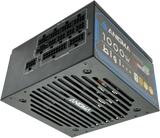
You do not need an enormous 1000W unit for a basic computer. In fact, buying a very high-wattage PSU for an entry-level build is another waste of budget. What matters is choosing something appropriate from a trustworthy source.
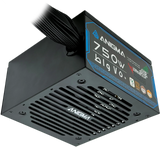
For context, Anigma currently lists its 750W Bronze non-modular unit at AED 160, showing that a usable PSU does not necessarily need to take over the entire build budget.
For a low-power system that may receive a graphics card later, buying a sensible PSU now can save you from replacing it during the upgrade.

16GB RAM Is Worth Aiming For
Memory is another area where budget systems are often cut too aggressively.
You may find cheap PCs with 8GB of RAM, and they can still run basic software and some games. The problem appears once Windows, a browser, Discord and a game are all running together.
For a new gaming-focused setup in 2026, 16GB is a much healthier target if the budget can accommodate it.
Memory configuration also matters for systems using integrated graphics. Because the graphics portion of the processor uses system memory, running two memory modules rather than a single stick can have a noticeable effect in some workloads and games.
That is why a balanced PC matters more than chasing one impressive specification.
A machine with a decent processor, 16GB of properly configured RAM and an SSD can feel much better in everyday use than a poorly balanced system built around one flashy component.
Do You Need a Large SSD?
Not immediately.
Storage prices and game sizes can make this decision difficult, but you do not need to solve your storage needs for the next five years on day one.
If the budget is extremely tight, a smaller SSD can be enough to install Windows, your main applications and a few games. Storage is one of the easiest components to add later.
What you should avoid, if possible, is building a gaming PC that relies entirely on an old mechanical hard drive as the main system disk.
An SSD has a noticeable effect on boot times, application loading and general responsiveness. It will not magically increase your gaming frame rate, but it can make an inexpensive PC feel much less frustrating to use.
If choosing between an oversized case and usable SSD storage, take the SSD.
Build for the Upgrade, Not Just for Today
This is probably the most important advice for anyone working with a very low PC budget.
Think about what happens six months or a year later.
A 1000 AED machine may begin as an integrated-graphics system. Later, you add a graphics card. After that, perhaps storage increases. Eventually, RAM or the processor can be upgraded if the motherboard supports it.
That is a much healthier path than buying a strange combination of old parts just to say you already have a dedicated GPU.
A sensible upgrade path also changes how you choose the motherboard and power supply. The absolute cheapest options may save money today but force another purchase later.
This is where a custom PC builder can be useful. Instead of accepting whatever combination happens to be inside a cheap prebuilt computer, you can look at the individual parts and understand where your money is going.
Anigma's current build-your-own-PC service lets UAE buyers choose the case, processor, motherboard, graphics card, SSD, PSU and other parts separately. The company also lists professional assembly and cable management as free services within that builder.
Even if your current budget is too low for the final system you want, using a builder can help you understand what the eventual upgrade will cost.
Is a Prebuilt Gaming PC Better?
At higher budgets, prebuilt gaming PCs are convenient because the parts have already been selected, assembled and tested.
At 1000 AED, however, finding a new gaming-focused prebuilt from a reputable retailer is difficult because the hardware itself costs more than that.
Anigma's current gaming PC range gives some useful context. Its budget i3-14100F system with an RTX 3050, 16GB RAM and 512GB M.2 storage is listed at AED 3,799. The company's higher entry-level RTX 5050 and RTX 5060 configurations move beyond AED 4,000.
That does not mean every gaming PC needs to cost 4,000 AED. It does show the difference between a genuinely new gaming computer with a dedicated GPU and the type of machine that can be assembled for 1000 AED.
If you find a “new gaming PC” for a fraction of that price, look beyond the headline.
Check the processor generation, graphics hardware, RAM, storage and power supply.
How Much Should You Really Spend?
There is no magic number because everyone plays different games.
For somebody who mainly wants light esports gaming, schoolwork, browsing and everyday PC use, starting around 1000 AED can still make sense if you accept integrated graphics or carefully selected used components.
If you want a new machine with a dedicated modern GPU, your budget needs to move significantly higher.
Current UAE retail pricing shows entry-level complete systems with modern dedicated GPUs sitting several thousand dirhams above the 1000 AED mark. Anigma's RTX 3050 budget prebuilt at AED 3,799 is a useful example of where a complete new dedicated-GPU setup currently begins within its catalogue.
That may sound disappointing, but knowing the real cost before buying is better than wasting 1000 AED on hardware you immediately want to replace.
Sometimes the smartest gaming PC purchase is waiting another few months and increasing the budget.
Common Mistakes When Buying a Cheap Gaming PC
The easiest mistake is shopping by the words “gaming PC” instead of the specifications.
There is no technical requirement a computer has to meet before a seller can make it look like a gaming system. RGB lights, a glass case and a gaming keyboard do not tell you how many frames the PC will produce.
The processor and GPU matter far more.
Another common mistake is spending everything on one component. A powerful used graphics card paired with a poor-quality PSU and an extremely weak CPU may create more problems than it solves.
People also forget the rest of the setup.
If the 1000 AED budget includes the monitor, keyboard, mouse, headset and Wi-Fi equipment as well as the PC itself, the amount available for the computer becomes even smaller.
Work out what the budget actually covers before shopping.
Finally, do not buy components just because the discount looks large. PC parts should be chosen because they work well together and suit your use, not because the original price has a line through it.
Should You Build a 1000 AED Gaming PC or Save More?
If you need a computer now and your gaming needs are modest, there is nothing wrong with starting small.
A well-planned integrated-graphics system can handle everyday tasks and lighter games while giving you a base to improve later. A carefully checked second-hand PC can also offer surprisingly good value.
If your goal is modern AAA gaming, high graphics settings or a dedicated GPU from the beginning, saving more money is the better option.
You will have a much wider selection of components, fewer compromises and a PC that lasts longer before upgrades become necessary.
There is no prize for staying under 1000 AED if the final computer does not do what you bought it to do.
Final Thoughts
A gaming PC under 1000 AED is possible, but the phrase needs some context.
At this budget, you are looking at an entry-level system, integrated graphics, used hardware or a PC designed around future upgrades. A brand-new gaming machine with a modern dedicated GPU is a different category and currently costs considerably more in the UAE.
That is not a reason to abandon the idea of building a PC.
It is a reason to build more carefully.
Spend less on appearance and more on parts that affect daily use. Do not sacrifice power-supply quality for RGB lighting. Aim for enough RAM, use an SSD, and think about the graphics card you may add later.
Most importantly, choose the PC around the games you actually play.
Someone who spends every evening in Valorant has very different requirements from someone buying a system for the latest AAA releases. The best budget is the one that matches those requirements without paying for performance you do not need.
If your budget is fixed at 1000 AED, build a strong starting point.
If you have room to save more, you will get much better gaming value by moving into a budget where a dedicated graphics card and balanced supporting hardware are realistically possible.
Either way, do not let a “gaming” label make the decision for you.
Look at the parts.
That is where the real value is.
Frequently Asked Questions
Can I build a gaming PC under 1000 AED in the UAE?
Yes, but you will need to accept compromises. An integrated-graphics build, selected used parts or a system designed for future upgrades is more realistic than a fully new PC with a modern dedicated graphics card.
Can a 1000 AED PC run Valorant?
A suitable entry-level system can run lighter esports games such as Valorant, although performance depends on the processor, integrated or dedicated graphics, memory configuration and settings used.
Can I get an RTX gaming PC for 1000 AED?
A complete new RTX gaming PC is not realistic at this budget based on current UAE retail pricing. Some RTX graphics cards alone can cost close to or more than the full 1000 AED budget.
Is it better to buy a used gaming PC?
Used hardware can offer much better performance for the money, but it also carries more risk. Check the exact components, test the system when possible and avoid choosing a PC simply because the case looks new.
Should I buy 8GB or 16GB RAM?
If the budget allows, 16GB is the better target for a gaming PC today. It gives Windows, games and background applications more room and is particularly useful for systems using integrated graphics.
Should I save more than 1000 AED?
If you want a new gaming PC with a dedicated GPU, saving more is strongly recommended. A larger budget gives you a more balanced system and reduces the chance that you will need to replace major parts shortly after buying it.
شارك:


